
About Us
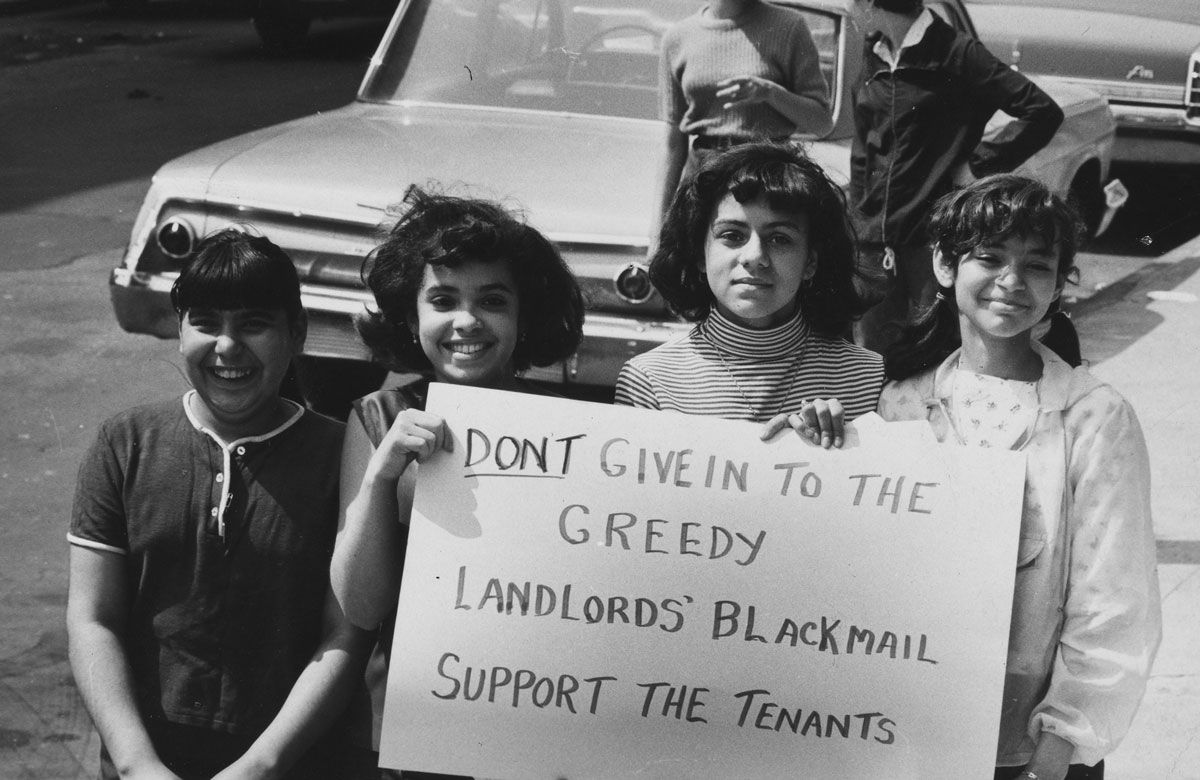
The Metropolitan Council on Housing is a tenants’ rights membership organization built by New York City tenants around our motto, “housing for people, not profit.” For more than 65 years, we’ve organized tenants to fight for safe, decent, affordable housing and stronger protections for all New Yorkers.
We serve NYC’s one million rent-stabilized and rent-regulated households, with a focus on working-class and low-income tenants most vulnerable to displacement. Our free tenant-assistance programs, including a rights hotline and walk-in clinic, help thousands of New Yorkers each year.
We also publish the city’s only monthly newspaper dedicated to the tenant movement and produce a weekly radio show on housing issues.
Our Model
Unlike most nonprofits, our model is mutual aid: tenants helping tenants. We encourage those who receive help from us to become active in our campaigns for housing justice. Member-run services and organizing go hand in hand — we believe tenants most affected by housing policy should lead the fight to change it.
Our work is carried out by members. Nearly all of our funding comes from the dues and donations of people like you who believe in what we do. Please become a member or make a donation today.
Our History
For more than 65 years, the Metropolitan Council on Housing has been at the forefront of the fight for housing justice in New York City — working to preserve and expand decent, integrated, affordable housing for all. Explore our decade-by-decade history and the movements that helped shape tenants' rights across the city.
The origins of the Metropolitan Council on Housing
During the early spring of 1959, housing activists from across New York City began to gather at the 23rd Street YMCA to share stories and tactics from tenant and community struggles against urban renewal projects in the city.
Jane Benedict, a former labor organizer, founded the Yorkville Save Our Homes coalition to oppose the construction of luxury condos in her neighborhood. Jane hired a sound truck to broadcast information about upcoming meetings to the neighborhood.
Further downtown, in Chelsea, Jane Wood led her Latino neighborhood in opposing the Penn Station South redevelopment project, which would have replaced six blocks of low-rent tenements with high-rise housing.
In Cooper Square, future SNCC activist Staughton Lynd led the fight against urban renewal, and in the Lower East Side, Frances Goldin and Esther Rand organized tenants out of their local American Labor Party office.
In May 1959 these organizers were joined by several others and formalized their meetings as the Metropolitan Council on Housing (popularly known as Met Council), a citywide organization that rapidly emerged as a major force in the New York City tenant movement.
Join Us Today!
Help us achieve our goal of a city where safe, decent, affordable housing is a right, not a privilege.
Contact Us
We will get back to you as soon as possible.
Please try again later.
Organizer Biographies
Learn about some of the organizers who have shaped Met Council on Housing over the years, including Jane Benedict of Yorkville Save Our Homes, Jane Wood from the Chelsea Coalition on Housing, Harlem tenant organizer Bess Stevenson, and others.
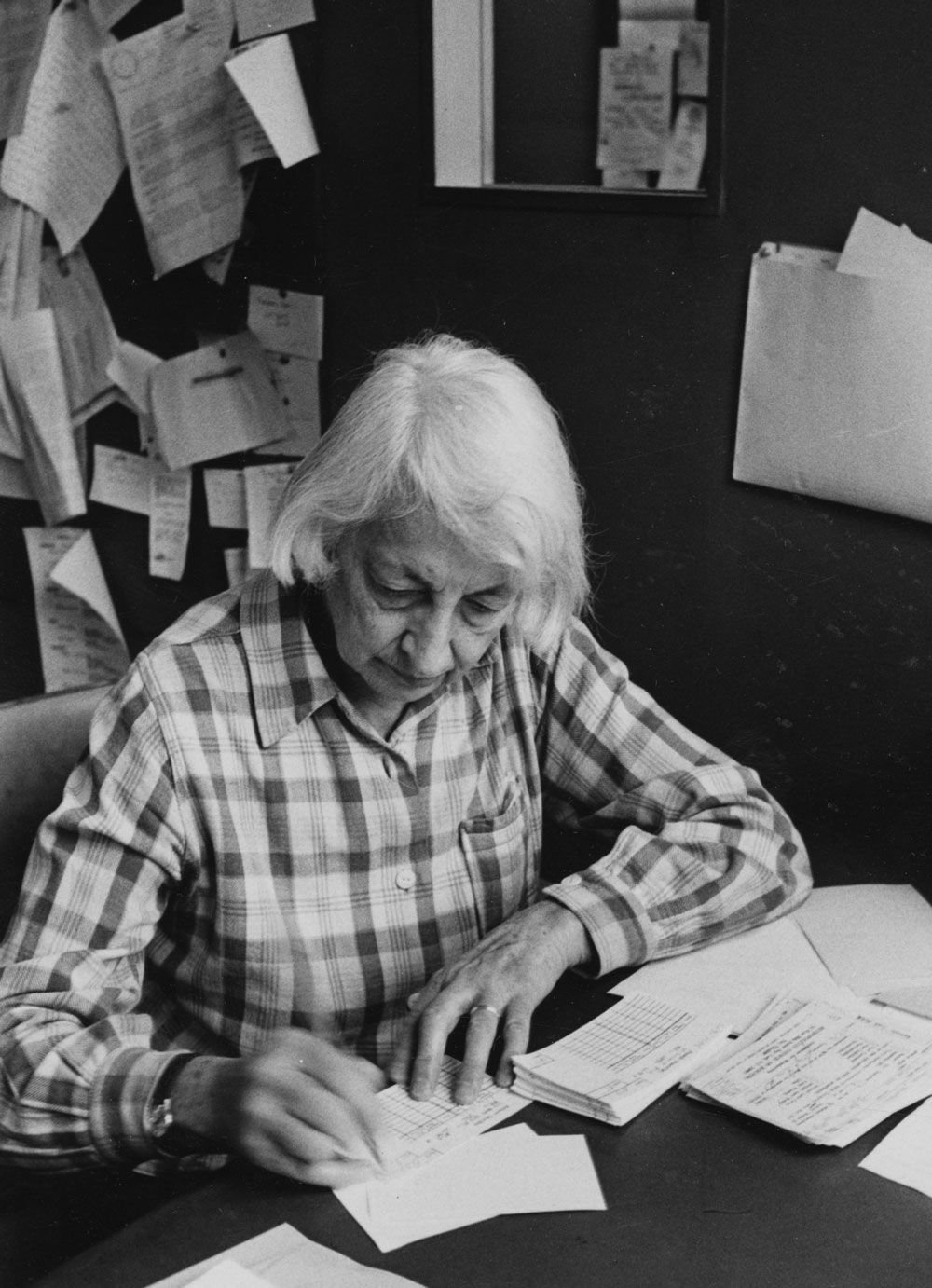
These biographies describe the founders and early activists of Met Council on Housing. A mostly woman-led organization, Met Council on Housing was also integrated from the beginning. Several of these women emerged from the Jewish radical tradition, and most were at one time members of the Communist Party and the American Labor Party.
Jane Benedict
Frances Goldin
Esther Rand
Bill Stanley
Bess Stevenson
Jane Wood
Jane Wood, the founder of the Chelsea Coalition on Housing, became involved in tenant organizing after witnessing the poor housing conditions in her neighborhood while canvassing door-to-door for the American Labor Party. Her Spanish language skills allowed her to develop close organizing relationships with her Latino neighbors, and all Chelsea Coalition on Housing meetings were conducted bilingually. She led the unsuccessful fight against the Penn Station South urban renewal project and was a prominent supporter of the squatter movement. Jane remained a committed tenant organizer throughout her life — at age 93, she slept in the lobby of her apartment building to hasten an elevator repair.
Jane Wood (1907-2004)
A Lower East Side activist, Frances Goldin honed her organizing skills at the University Settlement Housing Clinic and in her Communist Party section. In addition to her long-term leadership of the Cooper Square Committee, Frances had multiple responsibilities within Met Council on Housing, including heading the Legislative Committee. She was also an active supporter of the squatter movement. In 1950 she ran for State Senator on the American Labor Party ticket, alongside W.E.B. Du Bois. Frances also lectured at Fordham University and is a prominent literary agent.
Frances Goldin (1924- 2020)
A committed tenant organizer, Esther Rand founded the East Side Tenants Council during the 1950s. This local organization later became the first neighborhood branch of Met Council on Housing. Esther opposed urban renewal with the Cooper Square Committee, helping to draft the influential Alternative Plan for Cooper Square. She spoke frequently on the radio about tenant issues, hosting Housing Notebook on WBAI from 1975 until her death. A feared tenant advocate and long-time Communist Party member, Esther was known for saying “landlords are not lords of the land, they are scum of the earth.”
Esther Rand (1907-1981)
A founding member of Met Council on Housing, Bill Stanley was a prominent Harlem tenant organizer. In addition to serving as Vice-Chair, Bill was the main organizer for the West Side branch of Met Council on Housing. Bill worked with Columbia University students to successfully oppose the construction of a gym in Morningside Park. Bill was a prominent voice connecting the work of Met Council on Housing to the civil rights movement, and in later years often spoke of the importance of the era to younger activists.
Bill Stanley (1904-1979)
The first Vice-President of Met Council on Housing, Bess Stevenson became a tenant organizer after defending herself in Housing Court in 1939. Bess was responsible for building a strong Harlem branch office and later served as chairwoman of Met Council on Housing. Bess was a respected rent strike organizer and tenant advocate in Manhattan's Housing Court. She vowed in a City Limits magazine interview, "as long as God gives me strength, I'm going to fight 'til tenants have some rights."
Bess Stevenson
Jane Wood, the founder of the Chelsea Coalition on Housing, became involved in tenant organizing after witnessing the poor housing conditions in her neighborhood while canvassing door-to-door for the American Labor Party. Her Spanish language skills allowed her to develop close organizing relationships with her Latino neighbors, and all Chelsea Coalition on Housing meetings were conducted bilingually. She led the unsuccessful fight against the Penn Station South urban renewal project and was a prominent supporter of the squatter movement. Jane remained a committed tenant organizer throughout her life — at age 93, she slept in the lobby of her apartment building to hasten an elevator repair.
Jane Wood (1907-2004)
Early Grassroots Political Action
Met Council on Housing used grassroots community organizing to advocate for tenants’ rights. In the years following Met Council on Housing’s founding, the organization addressed pressing issues such as urban renewal, the need for more public housing and the expansion of Columbia University into Morning side Heights.
Early Grassroots Organizing
Met Council on Housing’s grassroots campaigns during the 1960s addressed issues of urban renewal, discriminatory evictions and increasing residential segregation that affected neighborhoods throughout the city.
Urban Renewal
The founders of Met Council on Housing were brought together by their neighborhood struggles against urban renewal in New York City during the 1950s. Directed by planning czar Robert Moses, urban renewal sought to remove substandard housing and stimulate downtown economies. However, the process involved the widespread demolition of working class neighborhoods in favor of middle class housing developments. By 1959 sixteen massive projects had displaced over 100,000 people, who were disproportionately African-American or Latino. By the late 1950s “Save Our Homes” organizations across the city were successfully exposing the pain of wholesale neighborhood destruction and the role of urban renewal in perpetuating racial segregation. While opposing the destruction of neighborhoods, campaigning for the removal of Robert Moses, and creating alternate plans for redevelopment, Met Council on Housing brought together the work of organizations such as Yorkville Save Our Homes, the Chelsea Coalition on Housing, and the Cooper Square Committee.
Public Housing
Public housing has always been a fundamental part of Met Council on Housing’s political goals. In New York City, large-scale public housing projects contributed to the displacement of low-income families, as neighborhoods were razed for new developments. Met Council on Housing proposed a more radical solution to the housing crisis: a ban on the destruction of livable housing, the strict enforcement of existing housing codes and the construction of small-scale public housing projects on vacant land (termed “vest-pocket” housing). Met Council on Housing published these suggestions in the 1964 report A Citizens’ Survey of Available Land, which documented 122 vacant sites on which low-income housing could be built without displacing residents.
Columbia University
Tensions between Columbia University and neighboring residents in Morningside Heights and Harlem had been simmering since the early 1950s, when an urban renewal project displaced thousands of residents north of 122nd Street. Columbia University continued its expansion into Morningside Heights throughout the 1960s, evicting tenants who were disproportionately African-American or Latino, and leading to a New York City Human Rights Commission investigation. Met Council on Housing member Marie Runyon, co-founder of Morningsiders United, led the fight to preserve low-income, integrated housing in Morningside Heights. Morningsiders United, with support from the activist organization Students for a Democratic Society, challenged Columbia University’s policy of keeping apartments intentionally vacant by reclaiming these buildings and preparing them for occupancy. Met Council on Housing also worked with student and neighborhood activists to successfully oppose the construction of a university gymnasium in Harlem.
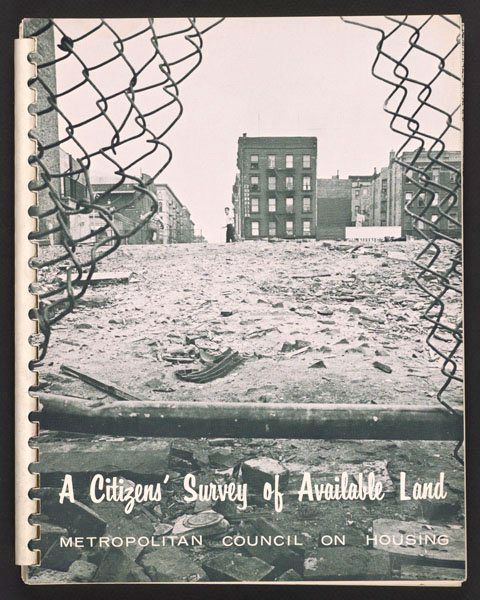
Grassroots Political Action of the ’70s & ’80s
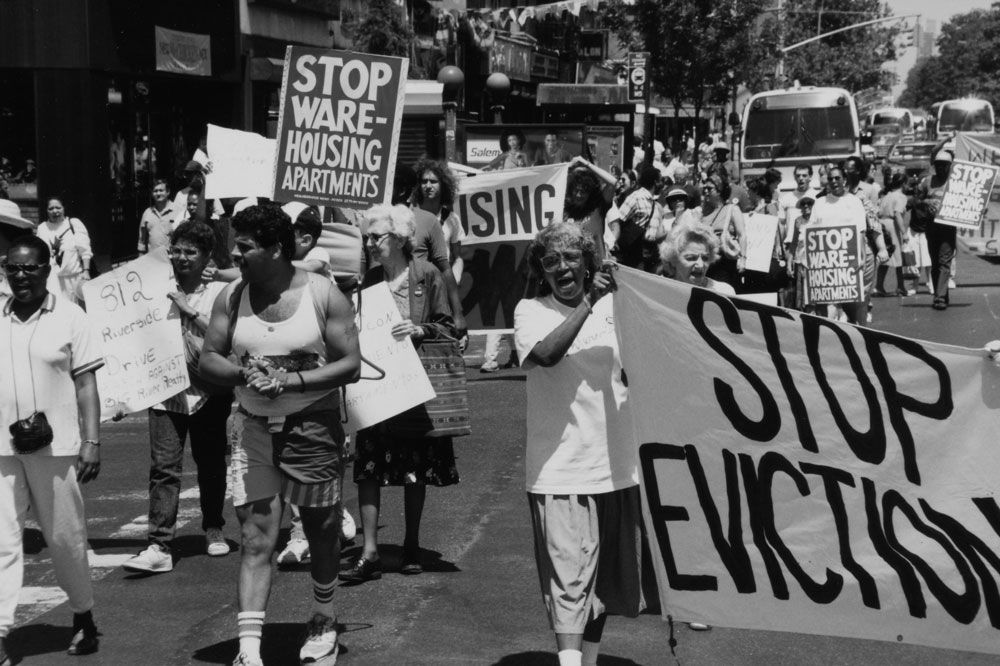
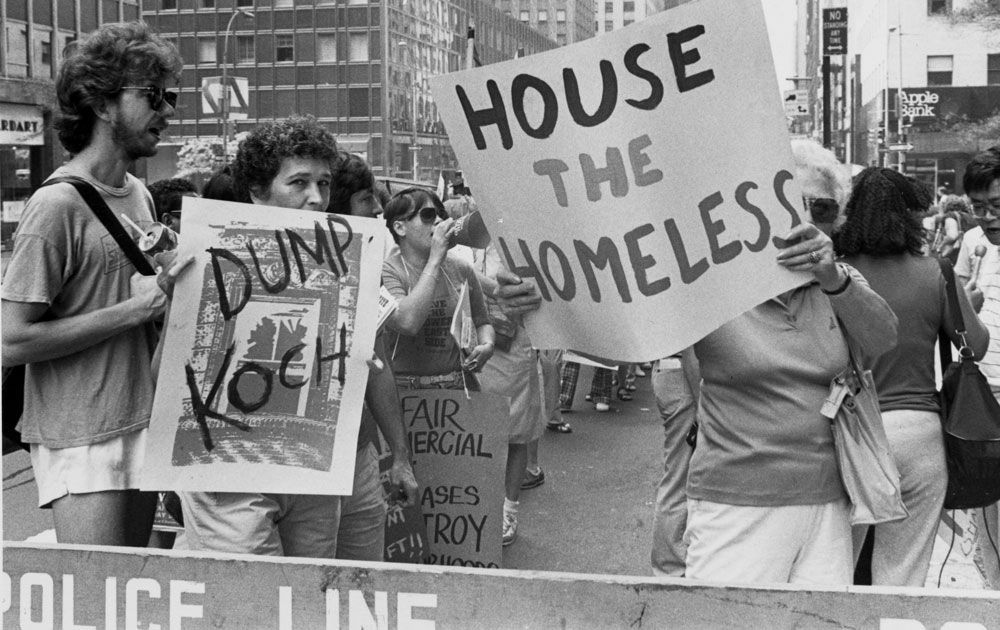
In later years, Met Council on Housing turned its attention to supporting the citywide squatters’ movement, raising awareness about poor housing conditions through events such as the People’s Court Housing Crimes Trial, and challenging the practice of warehousing apartments
During the 1970s and 1980s, Met Council on Housing focused on the need to increase the supply of decent and affordable housing for low-income families in the city. Met Council on Housing lent support to the Operation Move-In squatter movement, dramatized poor housing conditions in the People’s Court Housing Crimes Trial and opposed the practice of warehousing vacant apartments.
1970 Squatters’ Movement
Factors such as urban renewal, the physical expansion of major institutions like Columbia University, and the lack of sufficient public housing made it very difficult for low-income families to find housing in New York City during the late 1960s. During the summer of 1970, communities responded with a squatter movement which installed over 300 families in vacant apartments across the city. Most of these squatted apartments, frequently slated for demolition in urban renewal areas, were owned by the city or by large institutions. Led by African-American and Latino families, this squatter movement received support from Met Council on Housing in the form of help with repairs, negotiations with landlords and fighting evictions. Squatters succeeded in delaying institutional expansion into Morningside Heights. Some landlords yielded to demands, providing services in squatted apartments and for a few, the right to remain in their new homes. The squatter movement gained significant media coverage, giving exposure to critical housing issues such as urban renewal, property speculation, long-term vacancies and the need for affordable housing.
People’s Court Housing Crimes Trial
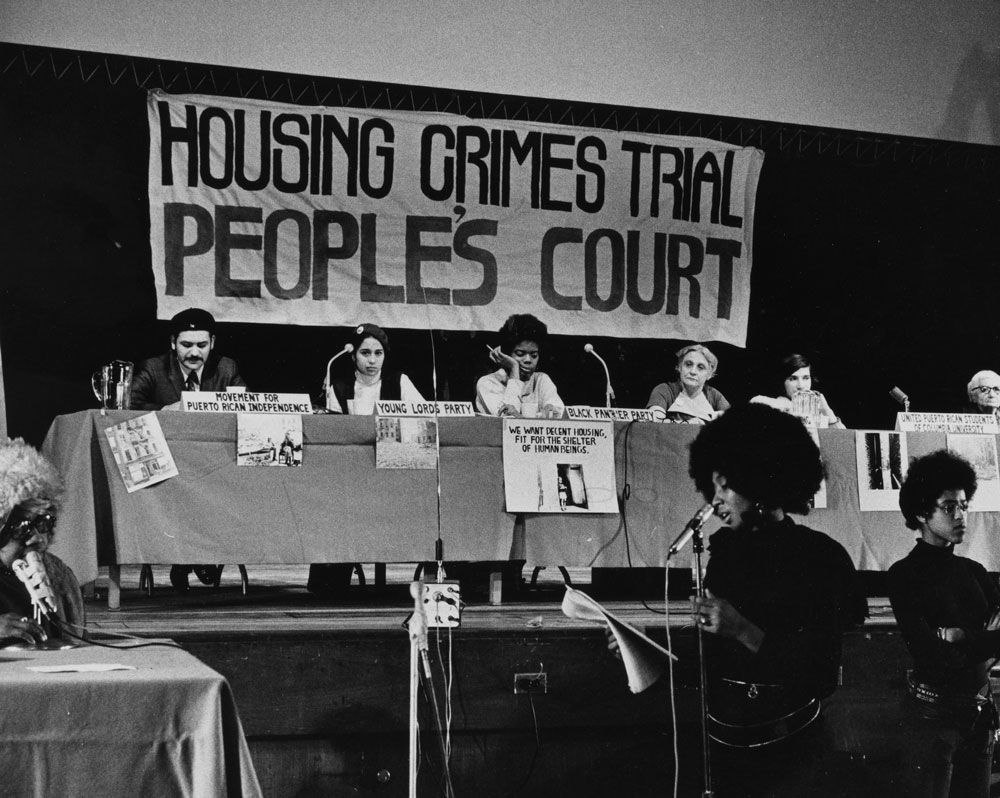
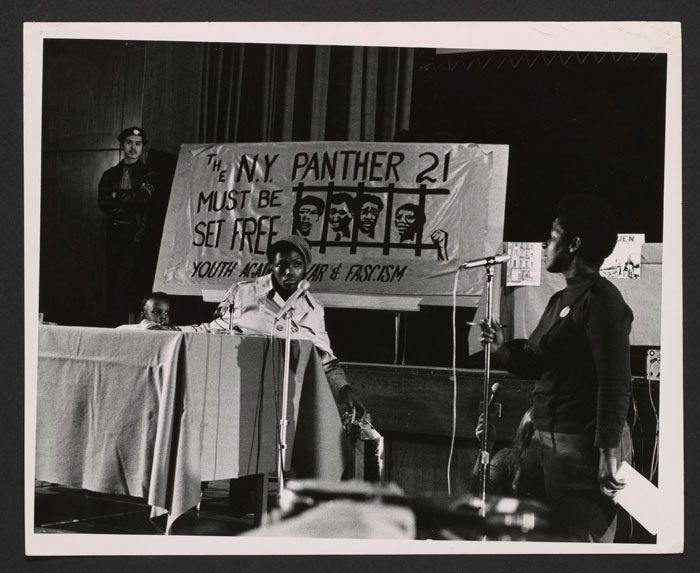
Met Council on Housing continued to work to expose the substandard housing conditions faced by low-income families. In December 1970 Met Council on Housing organized the People’s Court Housing Crimes Trial with the Black Panther Party, the Young Lords and I Wor Kuen (a radical Chinese organization). The event brought together a multiracial and intergenerational group of people working on housing issues in New York City. Tenants, squatters and sympathetic city officials testified to an audience of 1,500 at Columbia University about the poor housing available to low-income residents. The testimonies were also heard by a panel of judges representing the Met Council on Housing, the Black Panthers, the Movement for Puerto Rican Independence, the Young Lords, and I Wor Kuen. A 13-count indictment was issued to the City of New York, as well as to the landlords and bank of the city. The People’s Court placed then-Mayor John Lindsay in contempt of court for failing to appear.
Warehousing
As the city rebounded from the 1970s financial crisis, new threats to tenants emerged during the 1980s. Coop conversion allowed landlords to convert their rental apartments into market-rate cooperatives or condominiums. The regulations for coop conversion allowed vacant apartments to be sold at higher costs, increasing the incentive for landlords to “warehouse” vacant apartments in preparation for conversion. By the late 1980s, a New York State survey estimated the between 40,000 and 100,000 apartments were being warehoused annually. Met Council on Housing campaigned for the passage of regulations by City Council to limit the warehousing of apartments.
An overview of the legislative campaigns central to the work of Met Council on Housing: challenging the Urstadt Law and Maximum Base Rent, campaigning for the Emergency Tenant Protection Act and the Flynn-Dearie rent control bill, and fighting the 1997 Rent Wars.
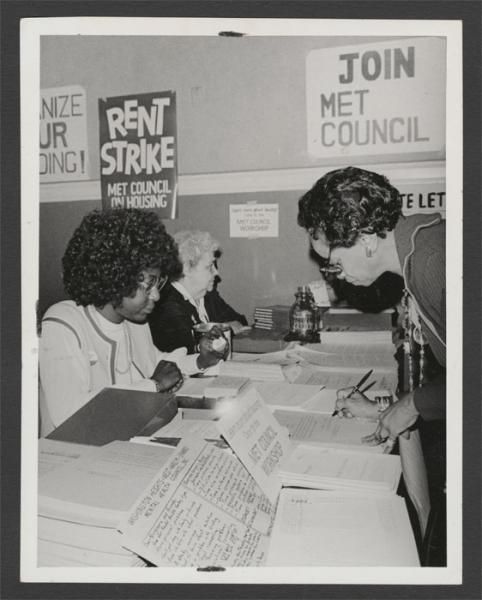
Legislative Campaigns
Rent control in New York City originated in wartime limitations on the rights of landlords due to emergency housing shortages. During World War II, the federal Office of Price Administration was given the authority to regulate local rents. After a year of tenant mobilization, a rent freeze was applied to the city in 1943. The provisions of this wartime rent control system continue to form the basis of the city’s rent regulations. Met Council on Housing has fought over the past fifty years to preserve and expand this system, particularly through periods of backlash such as the 1970s and 1990s, when the rent regulation system came under sustained attack from the real estate and landlord lobby groups.
Maximum Base Rent
In 1971 modifications to the rent control system were passed under Mayor John V. Lindsay, introducing rent increases through the Maximum Base Rent system. This system began with an initial across-the-board rent increase of 15%, as well as subsequent yearly increases of 7.5% until rent reached a state-determined maximum level. This legislation affected 1.3 million apartments in New York City. Met Council on Housing organized a rent strike campaign, which failed to gain citywide momentum, but did win specific concessions in forty striking buildings.
Home Rule and Vacancy Decontrol
Beginning in 1962, the policy of “home rule” allowed New York City to have control over housing legislation for the city. However, by 1972 Governor Nelson Rockefeller reversed this policy with the Urstadt Law, placing the responsibility for rent legislation in the hands of state politicians in Albany. This put tenants in NYC at a dramatic disadvantage when pursuing rent control legislation. At the same time, New York State legislature passed a second bill, introducing “vacancy decontrol” which removed rent regulations from apartments in New York City as tenants vacated their apartments. Met Council on Housing, along with organizations such as the East Harlem Tenants’ Council, called for a citywide rent strike in response to the Urstadt Law and vacancy decontrol.
Emergency Tenant Protection Act
After significant set backs like Maximum Base Rent, the reversal of home rule and vacancy decontrol, Met Council on Housing fought to maintain the remnants of the rent regulation system. An upswing in tenant organizing led to the passage of the Emergency Tenant Protection Act in 1974, which extended rent stabilization to most of the apartments affected by vacancy decontrol. Although the legislation was imperfect, it was vital for retaining the surviving rent regulations. Met Council on Housing collaborated with New York State Tenants Legislative Coalition to defend and extend the protections of the Emergency Tenant Protection Act throughout the 1970s.
Flynn-Dearie Bill
Throughout the late 1970s, Met Council on Housing collaborated with tenant organizations from across the state under the umbrella of the Coalition Against Rent Increase Pass-Alongs (CARIP). In 1979 CARIP backed the introduction in Albany of the Flynn-Dearie Bill, an uncompromising revision of existing rent regulations. The Flynn-Dearie bill would have eliminated the distinction between rent controlled and rent stabilized tenants, required landlords to open their books to state auditing before new rent increases were approved, and ensured that low-income seniors and disabled people never paid more than 25% of their income on rent. CARIP and Met Council on Housing lobbied intensely for the Flynn-Dearie bill. However, in 1983 the state assembly passed compromise legislation that excluded many of the provisions critical to Met Council on Housing’s vision for statewide rent control.
The 1997 Rent Wars
With existing rent regulations set to expire in June 1997, the real estate and landlord lobby launched their strongest attempt to destroy tenant protections in New York State since 1971. Tenants responded in great numbers to this threat. Met Council on Housing’s Annual Tenant Lobby Day saw over 7,000 people on the streets of Albany, including representatives from labor, the NAACP, religious organizations and community groups. Over 1,000 tenants gathered outside Governor George Pataki’s Manhattan office the day rent regulations were set to expire. The revival of a radical and diverse tenant movement succeeded in preserving the foundation of the rent regulation system, though tenants suffered a serious defeat. The Rent Regulation Reform Act of 1997 allowed 20% rent increases on vacant apartments, extended the impact of vacancy decontrol and placed new limitations on the powers of Housing Court.
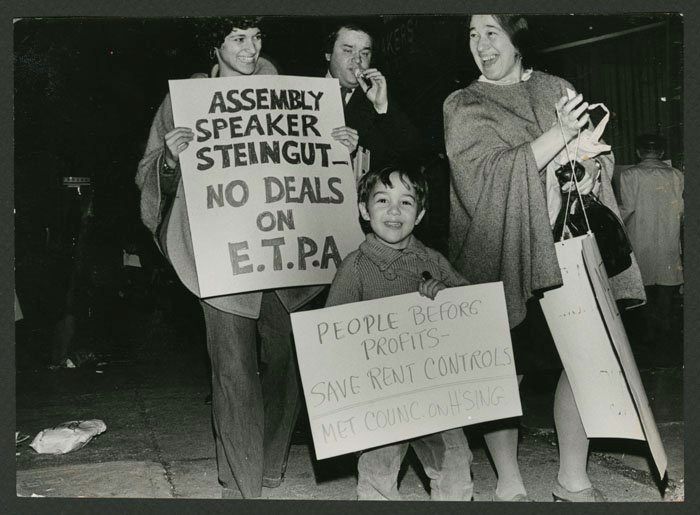
Collective Action and Mutual Aid
A look at the diverse tactics that Met Council on Housing has employed in pursuit of tenant justice: including rent strikes, vigils and annual trips to Albany for Tenant Lobby Day. Also an examination of tenant mutual aid, which has formed the basis of Met Council on Housing’s work since its founding, including branch offices across the city, rent clinics and WBAI’s Housing Notebook.
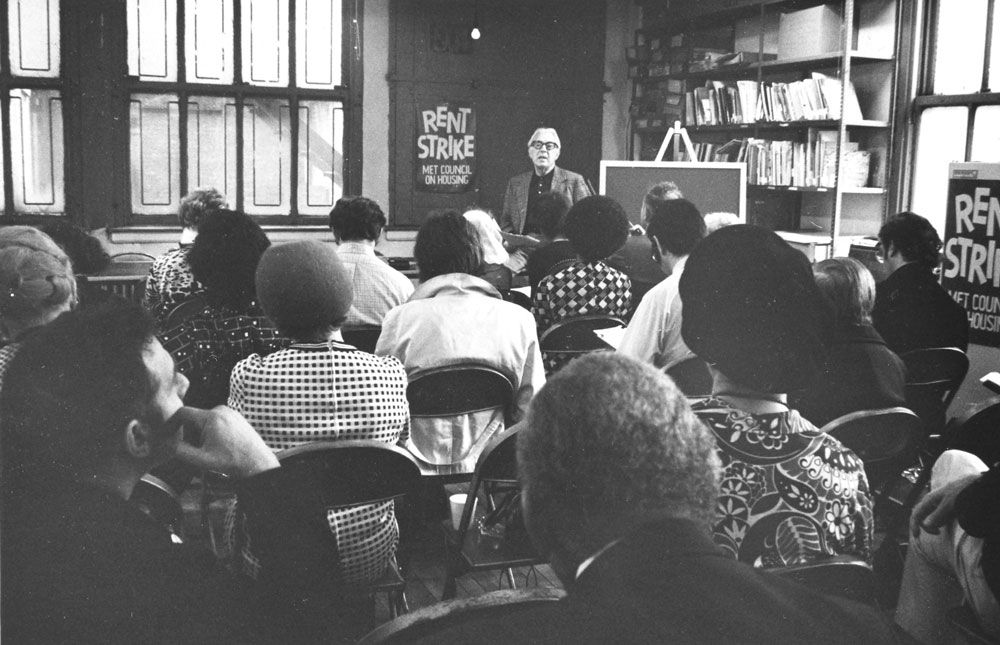
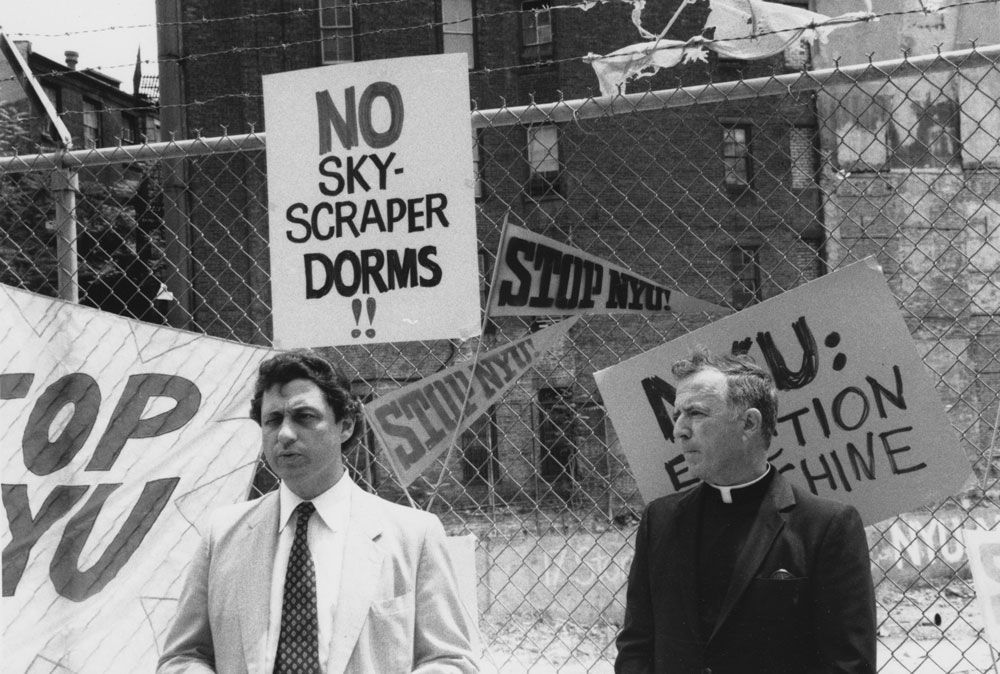
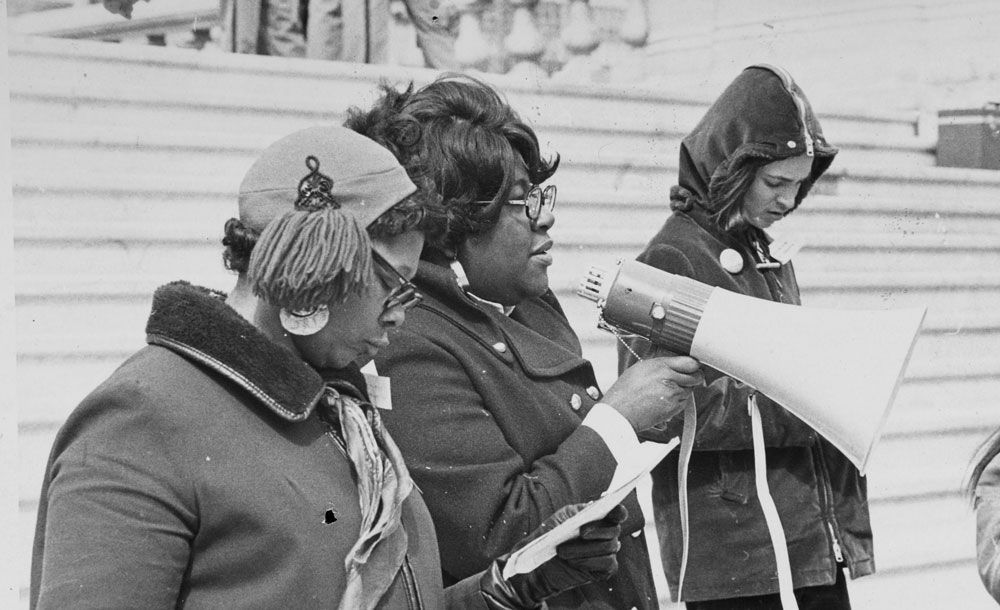
Over the past fifty years Met Council on Housing has employed a diverse array of strategies in pursuit of decent, integrated and affordable housing for the tenants of New York City. These tactics have included rallies, annual tenant lobbying trips to Albany, occupations or pickets of government agencies and homes of abusive landlords, supporting the squatter movement and educational events. Met Council on Housing has rejected formal paths to political power, instead relying on grassroots tenant organizing and mutual aid. The most striking examples of these tactics have been the rent strike and branch office educational activities.
Rent Strikes
Rent strikes have long been a central aspect of tenant activism in New York City. The first documented rent strikes in the city occurred on the Lower East Side in 1904, where the Jewish community organized to challenge rent increases in the densely populated immigrant neighborhood. In 1920 a well-publicized May Day rent strike was credited with pushing the city to approve the first rent control regulations. Rent strikes gradually transformed from short strikes in individual buildings to a strategy utilized collaboratively by multiple buildings for long periods of time. In 1970 two activist lawyers affiliated with Met Council on Housing created the rolling rent strike, in which tenants alternated which months they withheld their rent. This method successfully forced direct negotiations between landlords and tenants, and increased the bargaining power of rent strikers.
Mutual Aid
Met Council on Housing began as an informal coalition of tenant organizations from across the city, and over the course of the 1960s formalized its structure, introducing individual tenant memberships that have allowed the organization to remain independent from corporate or government funding. The Lower East Side Tenant Council, led by Esther Rand since the 1930s, became Met Council on Housing’s first neighborhood branch office. By the early 1980s there were thirteen branches located across the city, including East and West Harlem, Midtown, Central Brooklyn, Washington Heights, and West Queens.
These neighborhood branches became the focus of Met Council on Housing’s tenant mutual aid activities. Neighborhood branches held regular meetings and information sessions for tenants, providing general information on tenant rights, techniques for organizing buildings and getting repairs for rental units. Met Council on Housing also provided training in political organizing, such as workshops on how to write a press release or make a leaflet. Special meetings were held to discuss Met Council on Housing’s campaigns on rent control legislation or other citywide housing issues. Branches also provided rent clinics and hotlines, allowing tenants to get individual advice on their housing problems.
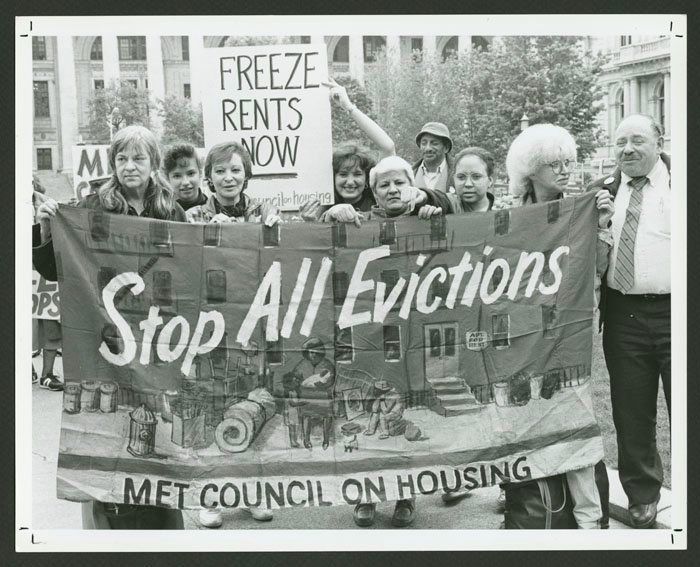
Solidarity
Met Council on Housing also lent their support to other political movements, sending a large delegation to the 1963 March on Washington for Jobs and Freedom, supporting the Trail ways Bus boycott and organizing with the Congress of Racial Equality, the Black Panther Party and the Young Lords
The early years of Met Council on Housing coincided with those of the civil rights movement. In addition to opposing racial discrimination in housing, Met Council on Housing worked in solidarity with organizations such as the Congress of Racial Equality, the Black Panthers and the Young Lords to support racial and economic justice in New York City.
1963 March on Washington
Organized by prominent civil rights activists Bayard Rustin and Philip A. Randolph, the August 28th 1963 March on Washington for Jobs and Freedom was a landmark event in the early civil rights movement, and the occasion of Martin Luther King Jr.’s historic “I Have A Dream” speech. Met Council on Housing sent a large delegation of tenants to the march, filling two railway cars.
Trailways Boycott
Several chapters of the New York Congress of Racial Equality (CORE) were formally affiliated with Met Council on Housing. In collaboration with the New York City Commission for Human Rights, CORE was engaged in negotiations with Trailways buses, which operated out of New York City terminals and refused to promote or hire African-American or Latino employees above entry-level positions. In 1964 Met Council on Housing endorsed and publicized a successful boycott of Trailways buses after the company failed to comply with a negotiated agreement.
Black Panthers and Young Lords
Met Council on Housing organized the 1970 People’s Court Housing Crimes Trial in conjunction with the Black Panthers and the Young Lords. Discussed in more detail in the “Grassroots Organizing” section of this exhibition, the Housing Crimes Trial saw eight hours of testimony from tenants and city administrators on housing conditions in New York City. Met Council on Housing received criticism from members who disagreed with the decision to organize with the radical Black Panthers. Met Council on Housing chairwoman Jane Benedict defended their decision in individual letters to members, stating that “we considered cooperation with these groups of great importance, in that they represent the ghetto poor, whose housing is indisputably the worst in the city.”
Bibliography and Credits
Further reading suggestions on the history of Met Council on Housing and tenant organizing in New York City, as well as the sources for this exhibition. Project credits and acknowledgements.
Suggested Reading and Exhibition Sources
For further reading on the history of the Metropolitan Council on Housing and tenant organizing in New York City, as well as the sources for this exhibition, please see the following:
- Angotti, Tom. New York for Sale: Community Planning Confronts Global Real Estate. Cambridge, MA: MIT Press, 2008.
- Bradley, Stefan M. Harlem vs. Columbia University: Black Student Power in the late 1960s. Chicago: University of Illinois Press, 2009.
- Corrs, Anders. No Tresspassing: Squatting, Rent Strikes and Land Struggles Worldwide. Cambridge, MA: South End Press, 1999.
- Gold, Roberta. City of Tenants: The Struggle for Citizenship in New York City Housing. University of Illinois Press, forthcoming.
- Lawson, Ronald. The Tenant Movement in New York City. New Brunswick, Rutgers Univesrity Press, 1986.
- Mele, Christopher. Selling the Lower East Side: Culture, Real Estate and Resistance in New York City. Minneapolis: University of Minnesota Press, 2000.
- Reaven, Marci. Citizen Participation in City Planning: New York City, 1945-1975. PhD diss., New York University, 2009.
- Schwartz, Joel. The New York Approach: Robert Moses, Urban Liberals and the Redevelopment of the Inner City. Columbus: Ohio State University Press, 1993.
- Zipp, Samuel. Manhattan Projects: the Rise and Fall of Urban Renewal in Cold War New York. Oxford: Oxford University Press, 2010
The research for this exhibition also drew heavily from the archives of the Metropolitan Council on Housing located at the Tamiment Library and Robert F. Wagner Labor Archive, New York University. Newspaper sources for the exhibition included the New York Times, the New York Amsterdam News, the Chicago Defender, City Limits Magazine, the Christian Science Monitor and of course Met Council on Housing’s own Tenant/Inquilino.
Credits
This digital exhibition and archive was completed as the final project for the Archives and Public History Masters program at New York University, and involved the collaboration of the Metropolitan Council on Housing, the Tamiment Library and Wagner Labor Archives and Digital Library Technology Services at New York University.
- Project Director and Curator: Maggie Schreiner
- Academic Advisor: Professor Peter Wosh
- Historical Advisors: Professor Roberta Gold; Professor Marci Reaven
- Special Thanks: Melitte Buchman, Zuzanna Kobrzynski, Mario Mazzoni, Chela Scott Weber
Digitization was conducted according to preservation standards (400 or 600 ppi, saved as uncompressed TIFF 6.0 files in CIE RGB color space). A total of 300 items were digitized for this project, and all digital files are available for research purposes at the Tamiment Library and Wagner Labor Archive, New York University. Every effort has been made to ensure appropriate rights for the material included in this website. Please contact info@metcouncilonhousing.info if you believe material has been included which is in violation of copyright.
View Current Campaigns
The Met Council on Housing’s active campaigns fighting for stronger tenant protections, rent justice, and affordable housing across New York City