
Previous Campaigns & Victories
Explore past campaigns highlighting the issues tenants have organized around and the changes they’ve fought to achieve. These campaigns reflect the ongoing work to protect tenants’ rights and build a more affordable, equitable New York City.
#HouseNY
How the Landlord’s Worst Nightmare Could Protect Millions of New Yorkers | NYT Opinion Jan 12, 2022
We believe that two things are at the root of New York’s housing crisis. First: the real estate industry has too much power, and people have too little. Second, the public sector has failed to invest in real solutions. This crisis is felt across our entire State and its impacts are devastating:
- 92,000 New Yorkers are homeless;
- 50% of low income tenants are paying more than half of their income in housing costs;
- Hundreds of thousands of tenants in public and private housing are living in substandard conditions, in fear of retaliatory eviction should they seek to enforce their rights;
- New York State has a shortage of over 650,000 homes for low income and working class people
Our Solution: #HouseNY
#HouseNY works together to invest public resources into housing for low income and working class New Yorkers, eliminate wasteful tax subsidies to corporate developers, and give tenants more rights to fight evictions and unaffordable rent increases.
Good Cause Eviction (A05573/S03082)
Good Cause Eviction stabilizes communities by giving tenants’ the right to remain in their home after their lease expires. It allows tenants a mechanism to challenge rent increases above 150% of the consumer price index or 3%, whichever is higher (around 8% this year.) If passed, it would prevent retaliatory evictions for 1.6 million households statewide.
Right now, tenants are facing price gouging and double-digit rent increases all over the State. This crisis falls hardest on Black families, who are three times more likely than white families to face displacement. Good cause eviction could change all that, allowing tenants to seek repairs or negotiate rent increases free from the fear of retaliation.
Tenant Opportunity to Purchase (TOPA) (A05971/S03157)
Often, when tenants come together and organize in their building, landlords sell off their property in order to avoid taking action to improve living conditions. With the rights that TOPA enshrines into law, tenants would have the leverage and power to win real repairs in their buildings and ultimately to take those buildings over for themselves.
TOPA gives tenants’ associations a right of first refusal when a building is for sale or foreclosure. Through TOPA tenants have the ability to assign those rights to nonprofit housing providers, community land trusts, and/or public housing authorities and convert homes to housing in the social sector.
Eliminate 421-a
421-a is a billion-dollar boondoggle. It is a tax exemption for luxury real estate developers, it fuels gentrification, drives up rents, and produces housing that is unaffordable to working families. 421-a expires in 2022, but Governor Kathy Hochul’s budget revives it and rebrands it as “485-w.” 421-a/485-w must be eliminated from the budget and allowed to expire in June.
Housing Access Voucher Program (HAVP) (A3701A/S2804B)
HAVP creates a statewide rental assistance program for New York. It provides subsidies to pay housing costs to homeless families/individuals, as well as tenants who are currently unstably housed. If passed, it would be the first rental assistance program in the United States that is open to undocumented people. HAVP must be funded at $1 billion annually in order to be effective.
Fully Fund the Housing Our Neighbors with Dignity Act (HONDA)
Last year the legislature passed HONDA, an unprecedented bill to allow for the purchase of abandoned hotels and commercial spaces to be converted to affordable housing for homeless New Yorkers — but only invested in converting hotels in New York City. Homelessness and divestment in our commercial real estate exists across New York State — we are fighting to expand this program so that homeless New Yorkers, housing providers, and cities from Buffalo to the Hudson Valley are able to convert distressed buildings into permanent homes for the homeless.

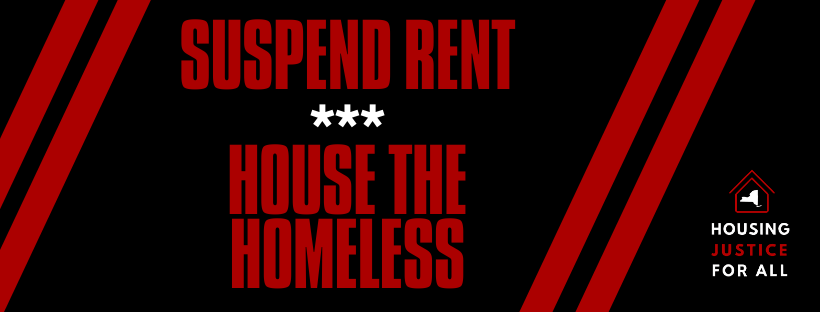
Cancel Rent and House the Homeless Campaign
A lot is unknown, a lot is changing every day – we know that we will get through this crisis by coming together. We are determined to make sure that the tenants of New York will not be hurt by their landlords.
Before COVID-19, New York was already in a housing crisis. 50% of the State could not afford their rent, and 92,000 New Yorkers were homeless.
Today, that crisis is reaching never-before-seen proportions. 1.1 million New Yorkers have lost income and are living on the brink of evicton. 51% of of Black families have missed a month of rent in the last 3 months. 100 New Yorkers have died in shelter, unable to take precautions to stay healthy during COVID-19.
There are 3 bills before the State legislature that, together, would meaningfully address the COVID-19 housing crisis and keep our families healthy and HOUSED.
If we don’t act now, it will be too late! Call your state reps and ask them to sponsor and pass these three bills TODAY!
- Cancel Rent (Salazar/Niou) (S8802/A10826)
- Eviction Moratorium (Myrie/Reyes) (S8667/A10827)
- Housing Access Voucher Program (Kavanagh/Cymbrowitz) (S7628A/A9657)
Save and Strengthen our Rent Regulation Laws
Why is rent-regulation so important? Most New Yorkers would never be able to afford the market rents on their own.
Save and Strengthen our Rent Regulation Laws
- ¡Ahorre y refuerce nuestras leyes de regulación de alquileres!
Why is rent-regulation so important?
Most New Yorkers would never be able to afford the market rents in their own neighborhoods. This is particularly true for lower-income tenants who live in areas that are experiencing gentrification. Many neighborhoods that used to be affordable to people of modest means have seen rents skyrocket, and the only reason why most long-time tenants are able to stay in the communities where they set roots is because of our rent-regulation laws. These laws protect the affordability of rental housing to over 2.5 million New Yorkers – more than all other affordable housing programs combined. Unlike every other affordable housing program, rent-regulation costs almost nothing, as it requries no government subsidies. The laws keep rent increases under control in privately-owned buildings and prevent landlords from imposing outrageous rent-hikes or evicting tenants without cause.
More about rent-stabilization:
The majority of New York City’s housing stock is rental – in some neighborhoods, nearly all of it. Moreover, the high value of land in the metropolitan region puts home-ownership out of reach for the majority of New York City residents. Rent-regulation provides stability to individuals, families, and entire communities, and is the primary reason why New York City remains a diverse, vibrant place that low- and moderate-income people can afford to continue living in.
The key protections of rent stabilization and rent control laws are:
- The right to continue living in your apartment while paying modest rent increases. By contrast, in unregulated apartments landlords can raise rates as high as they want whenever they want, no matter how long a tenant has lived in the apartment.
- Protection against eviction without cause. Landlords cannot evict or end the tenancy of a rent-regulated tenant unless they can demonstrate good cause, such as that the tenant failed to pay the rent, was a nuisance, or violated the lease. By contrast, a landlord can move to evict an unregulated tenant at the end of his/her lease without any reason, no matter how long the tenant has lived there.
- The right to good services and repairs, with recourse if they are not provided. Rent regulated tenants are able to assert their legal rights to repairs and adequate services without fear of retaliation, since tenants have the right by law to renew their leases. By contrast, in many cases when unregulated tenants complain about poor services or conditions, their landlords retaliate by refusing to renew their leases. Unregulated tenants are forced to choose between living in dilapidated housing and facing displacement.
Position papers:
- How The Preferential Rent Eviction Scam Started & Why It Must Be Repealed
- Rent Stabilization Is Not A Subsidy; It’s An Anti-Profiteering Measure
- Vacancy Decontrol Means The End Of Rent Regulation
- Don’t Believe the Hype! OUR Rents Are Not Going Down
- Rent Regulation Doesn’t Slow New Construction
- Ending Vacancy Decontrol Would Preserve Our Housing Stock
Met Council on Housing is a founding member of the Real Rent Reform Campaign, a coalition of housing and community groups, faith-based organizations, and unions, from across New York, that have unified to push for a package reforms to our rent regulation system. The majority of the reforms would restore the rent regulation system to the way it was for many decades, before the system was dismantled by the legislature in the 1990s.
State Legislative Priorities/ Prioridades Legislativas
Rent regulated housing is the primary source of housing for low income New Yorkers. However, the pressure to deregulate apartments has led to the de-stabilization of diverse neighborhoods. Tenants struggle with rising rents that have outpaced cost of living increases in income and the windfall landlords receive in deregulated units has led to harassment and fraud. The Real Rent Reform Campaign and the Alliance for Tenant Power is organizing to preserve and strengthen the rent regulation system legislatively to maintain diverse and livable communities.
Repeal vacancy deregulation:
S04474 (Stewart-Cousins)/A1865-a (Rosenthal)
This bill would repeal vacancy deregulation, the process by which, upon vacancy, landlords can remove apartments from rent regulation when rents rise over $2,500. Upon vacancy decontrol, a process that has deregulated over 300,000 apartments, rents can rise indefinitely, and tenants lose eviction protections. The bill also re-regulates most of the apartments that were deregulated in the last 15 years.
Protect tenants with “preferential rents”: S2828 (Krueger)/ A3809 (Wright)
This bill would close a loophole in the rent laws that currently impacts hundreds of thousands of “preferential rent” tenants. Preferential rents occur when a landlord offers a rent stabilized apartment for less than the legal regulated rent, which is often higher than the market will bear due to vacancy bonuses, IAIs, MCIs and RGB rent increases. As of now, when leases are renewed landlords can raise rents all the way up to the legal regulated rent, which can be hundreds of dollars higher than the preferential rate. This bill would require that preferential lease renewals be offered based on the lower rate, and only allows landlords to jump up to the legal regulated rent upon vacancy.
Make MCIs temporary surcharges:
S4423 (Krueger)/ A6054 (Kavanagh/O’Donnell)
This bill would turn Major Capital Improvement rent increases into temporary surcharges, rather than permanent additions to the rent. When a building-wide improvement is paid off, the surcharge would disappear. MCI rent increases would not be compounded into the monthly rent for the purposes of determining annual or biennial rent increases. The bill would also standardize the cap on MCI payments at 6% of total rent. Today rent controlled tenants can be charged up to 15% of their rent per MCI, while rent stabilized tenants have a 6% cap.
Eliminate the “vacancy bonus”:
S00951 (Serrano)/ A5567 (Kavanagh)
This bill would eliminate the statutory vacancy bonus, an automatic rent increase of up to 20% that landlords can use to raise rents every time the apartment turns over.
Reform the Individual Apartment Improvement rent increase system:
S3285 (Squadron)/A06069(Mosley)
It has become apparent that the imposition of unwarranted and fraudulent rent increases based on alleged “improvements” in vacant apartments is the greatest single factor driving the rapid inflation of rents and the single greatest threat to the affordability that the Rent Laws were enacted to preserve. Currently weak regulation makes it possible for unscrupulous landlords to unlawfully deregulate tens of thousands of rent stabilized units, and inflate rents in stabilized apartments to a level beyond the reach of many working families. The IAI system must be reformed.
End Fraudulent Fees:
S3583 (Espaillat)/ A1795 (Dinowitz) This bill would prohibit surcharges for tenant installed appliances, such as air conditioners or washing machines, where the tenant pays for electric utility services.
Rent control relief:
A398 (Rosenthal)
This bill would end the annual 7.5% rent increases and bring the increases for rent controlled tenants in line with typical rent stabilized adjustments through replacing the 7.5% rent increase with a rolling average of the past five years’ New York City RGB rent adjustments for one year leases on class A apartments. This bill would also eliminate the fuel and labor pass-alongs for rent controlled tenants, since fuel and labor costs are already factored into the RGB’s annual deliberations for rent adjustments.
Repeal deregulation of Rent Regulated apartments
It has become apparent that the possibility of deregulation of apartments puts current tenants at risk for harassment and fraudulent deregulation. Thus rent regulated apartments should stay rent regulated no matter the rent charged or the income of the families living in the apartment.
End Source of Income Discrimination:
S151-A (Squadron)/ A6764 (Crespo)
This bill would end the source of income discrimination, making it illegal for landlords to deny tenancy to people who pay their rent using Section 8 vouchers or any other forms of rental assistance.
Mitchell Lama reform bill:
A344 (Rosenthal)
This bill would authorize the local legislative bodies to declare a housing emergency and extend the protections of rent regulations to buildings that were formerly Mitchell-lama rentals or HUD subsidized housing and were privatized. Additionally this bill authorized local legislative bodies to declare a housing emergency and extend the protections of rent regulations to current Mitchell-Lamas rentals or HUD subsidized housing developments that will be privatized in the future.
Northern Manhattan is Not for Sale
This is Our Home. This Is Our City.
We Are Not For Sale. Join Us!
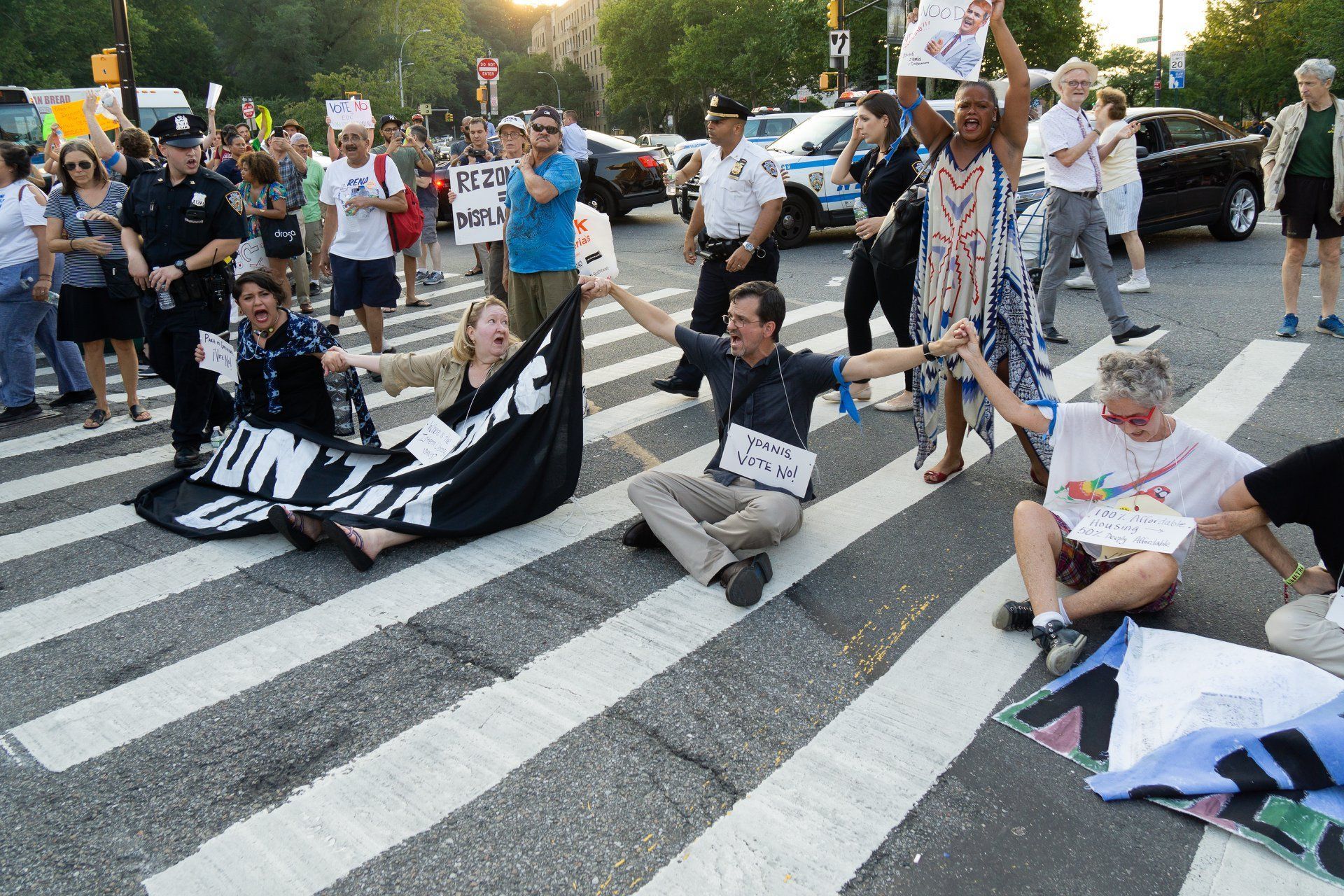
The City of New York Wants to Rezone Inwood.
Rezoning regulates what can be built and what rules apply to the buildings in your community. This gives landlords incentive to force tenants out, and risks mass displacement of current residents.
Are you facing these issues?
- Landlord Harassment
- Rent Overcharges
- Ongoing Disrepair
It’s Not Too Late.
The Community Needs To Know What You Think.
- Discuss important questions like how we can preserve affordable housing and keep existing rent affordable. We want you to know about the rezoning proposal for East of Broadway and share your concerns & ideas.
Stand For Tenant Safety
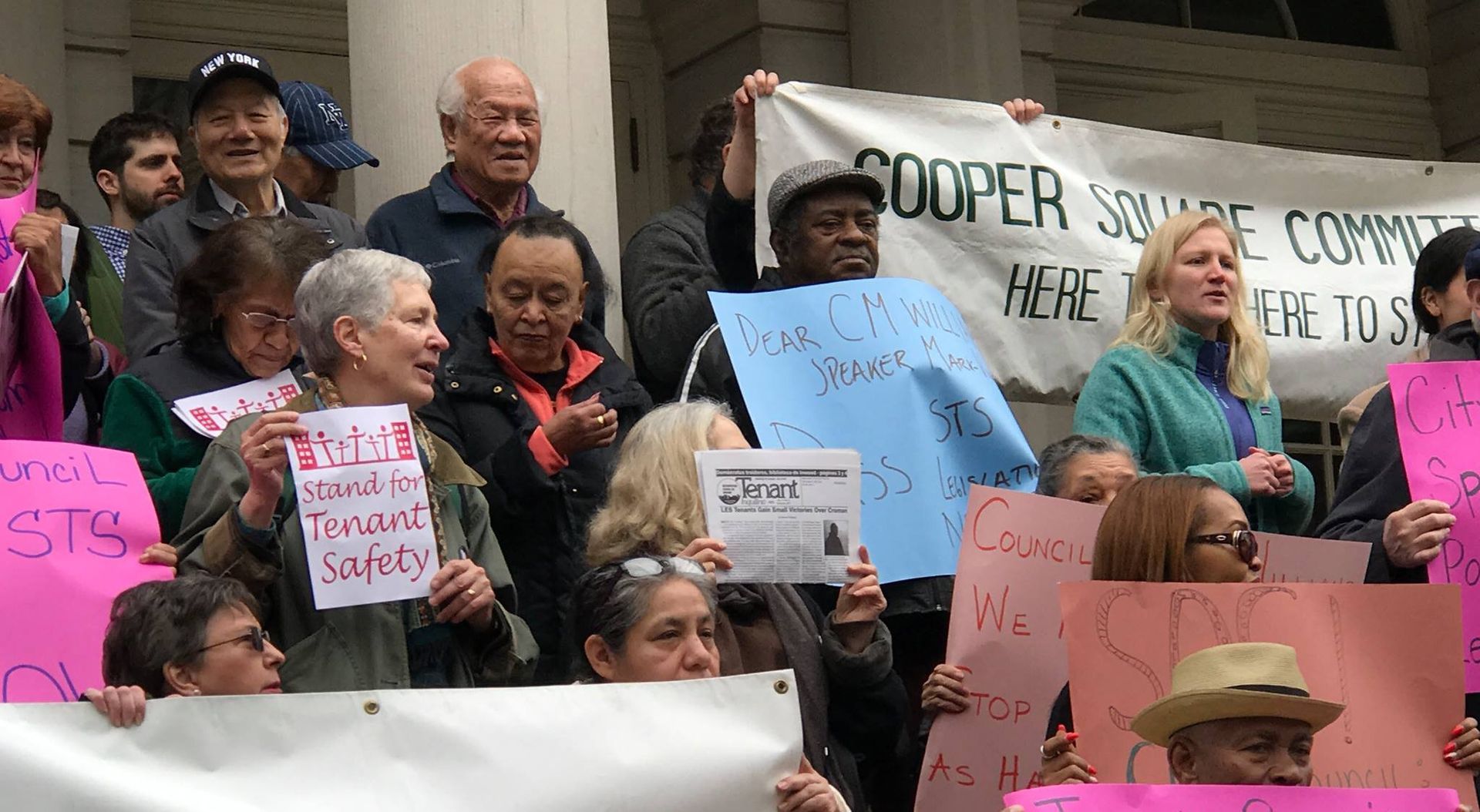
Who We Are We are a coalition of tenant advocacy organizations fighting to secure safe housing for all tenants!
Stand for Tenant Safety is a coalition we are part of with other tenant organizations from all over the city to fight for to END CONSTRUCTION AS HARASSMENT! . Construction as harassment is when your landlord makes excessive noise, disorder, or hazardous living conditions through construction TO FORCE YOU OUT OF YOUR RENT-REGULATED APARTMENT.
Who We Are
We are a coalition of tenant advocacy organizations fighting to secure safe housing for all tenants!
The Problem
Tenant safety, especially against CONSTRUCTION AS HARASSMENT! Construction as harassment is when your landlord makes excessive noise, disorder, or hazardous living conditions through construction TO FORCE YOU OUT OF YOUR RENT-REGULATED APARTMENT.
By forcing you out of your rent-regulated apartment, landlords can collect vacancy bonuses by raising the prior rent by up to 20% for the next tenant, and conduct gut rehabs, or IAIs, during the vacancy which do not require tenant approval and are permanent increases to the rent!
This can be constant construction in the morning and nights, work without permits, work that disrupts your gas, water, or electricity, and work that leads to dust, lead, and other dangerous toxins in the air! Because the city cannot put liens on apartment buildings, landlords are not afraid to ignore their ECB fines, meaning the city is UNABLE to actually enforce penalties!
Furthermore, too many processes and applications are NOT TRANSPARENT! Because landlords fill out paperwork and applications without tenant knowledge and oversight, tenants cannot hold landlords accountable for their lies and abuses! For example, many landlords claim a building is unoccupied, allowing them to conduct certain construction projects, even though tenants are still living there!
Lastly, we fight for tenant’s safety because even when the city issues a vacate order to move tenants out of unlivable housing, the city DOES NOT issue correction orders to the landlord to actually FIX these issues!
How YOU can join our fight?
We are currently working to get 12 BILLS passed to correct these systemic flaws and empower tenants to stand up to their landlords! You can help advocate for these bills, join our rallies and call-ins, speak to your city council member, and help organize other tenants to stand up for tenant safety!
We also encourage you to ORGANIZE with us! By organizing with us, we can make sure that yours and every other tenant’s stories and concerns are heard by city council members, tenant advocacy organizations, and other tenants! Moreover, by volunteering with our tenant’s rights hotline, you can help inform other tenants of their rights as they fight landlords using construction as harassment!
Our 12 Bills
- Int 0918-2015: Requires DOB inspection rather than self-certification for buildings with plans for significant amounts of construction or a history of tenant harassment.
- Int 0924-2015: Requires DOB to issue orders to correct concurrently with vacate orders.
- Int 0926-2015: Creates greater interagency communication between the DOB, HPD, DOH, and DEP with an interagency task force of 13 members
- Int 0930-2015: Allows the city to put liens on apartment buildings if they fail to pay their ECB fines: 20< Units with $60,000 ECB fines, and for 6-19 Units with $15,000 ECB fines
- Int 0931-2015: Incentivizes payment of fines by allowing the city to initiate foreclosure proceedings against the buildings described in Int 0930-2015 as “distressed buildings”
- Int 0934-2015: Creates a Real Time Enforcement Unit within the DOB to respond to emergency-level conditions.
- Int 0936-2015: Strengthens the TPP by including information about the maintenance of essential services during construction, TPP to be made publically available on the DOB website, and posted in public places in the building. Lastly, the DOB must inspect building within 7 days to ensure compliance with the TPP, the DOB must issue a stop work order for a violation
- Int 0938-2015: Creates a watch list of contractors who have performed work without a required permit within the preceding 2 years. The DOB will perform one or more inspections on contractors on the watch list to ensure the legal application of the law. The contractor can be removed from the watch list after 2 years of proper work
- Int 0939-2015: To make penalties actual deterrents, fines will be increased, even for partial work without permits to 8x the amount of the fee payable for the permit for 1 or 2 family dwellings, with a new minimum penalty for doing partial work without a permit will set to $1000. Other than 1 or 2 family homes, the penalties will be 28x the fee payable, and the new minimum penalty will be increased to $10,000.
- Int 0940-2015: Fines for working with an active stop work order will increase to $10,000 for the first violation, and to $20,000 for each subsequent violation
- Int 0944-2015: Requires construction work permits on DOB’s website to disclose the reported occupancy status of the building and requires landlords who have done work without a permit to submit their future construction plans to their borough president, council member, and community board.
- Int 0960-2015: Landlords must post a “Safe Construction Bill of Rights” in at least English AND Spanish, and at least 14 days PRIOR to the start of construction work. Additionally, this information MUST be posted on every floor of the building:
- Description of the work being performed and its potential impact on tenants
- Hours of construction
- Timeline for the completion of the work
- Services offered to the tenants that might be affected (e.g. loss of hot water) and mitigation measurements the landlord is using to protect the tenants
- Who to contact at the landlord’s office if there is a problem, (24 hours a day)
- Who to complain to in the City if the tenant is concerned about the work being performed
End the Tenant Blacklist!
For years, New York’s housing courts have been selling the data of tenants who are taken to court by their landlords. The information is used to create “tenant screening reports,” which are sold to landlords to evaluate prospective new tenants. The reports are better known as the tenant “blacklist,” because when landlords find out that a tenant has been in housing court, no matter the reason, the tenant is usually denied the apartment she is applying for. Because of the blacklist, tenants are punished for:
- Legally withholding rent to get repairs that landlords refuse to make
- Defending themselves in eviction cases that are brought through no fault of their own
- Defending against frivolous claims made by their landlord
- Having a similar name as another tenant who was in housing court
Concern about ending up on the blacklist also causes many tenants to avoid housing court at all costs – discouraging many from exercising their legal rights.
What is Met Council on Housing doing to end the Tenant Blacklist?
The Metropolitan Council on Housing and the National Lawyers Guild’s New York City Housing Committee are joining forces to bring a federal civil-rights suit against the New York State court system, seeking to block the sale of Housing Court data that is used to create these blacklists. We are seeking potential plaintiffs for this case.
We are currently looking for plaintiffs for this case who meet the criteria below:
Have You Been Harmed By The Tenant Blacklist?
Have you been taken to housing court by a New York City landlord, and were you later turned down for a different apartment that you applied for, and do you believe that you qualified for the apartment you applied for – and that you had good credit and enough income to afford the rent?
Has The Tenant Blacklist Discouraged You From Asserting Your Rights?
Has concern for ending up on the tenant blacklist caused you to decide not to defend yourself in an eviction case? (You moved, settled, or paid rent you didn’t owe, in order to avoid going to court for a case you may have won.) or:
Have you received a notice of non-renewal or notice of termination of your lease, and are now deciding whether to fight the owner’s claims and risk winding up on the tenant blacklist?

View Current Campaigns
The Met Council on Housing’s active campaigns fighting for stronger tenant protections, rent justice, and affordable housing across New York City
Join Us Today!
Help us achieve our goal of a city where safe, decent, affordable housing is a right, not a privilege.
Contact Us
We will get back to you as soon as possible.
Please try again later.